
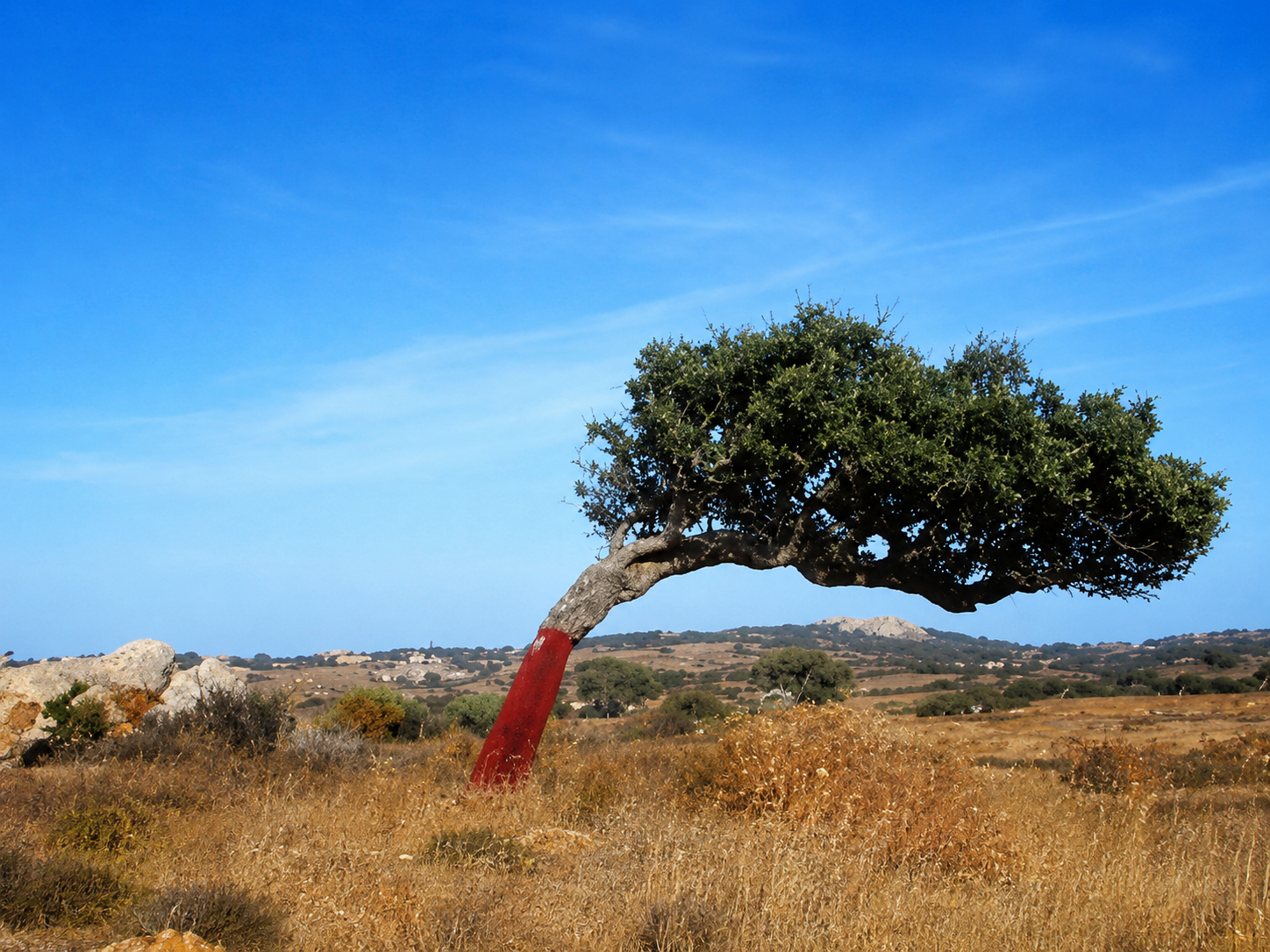
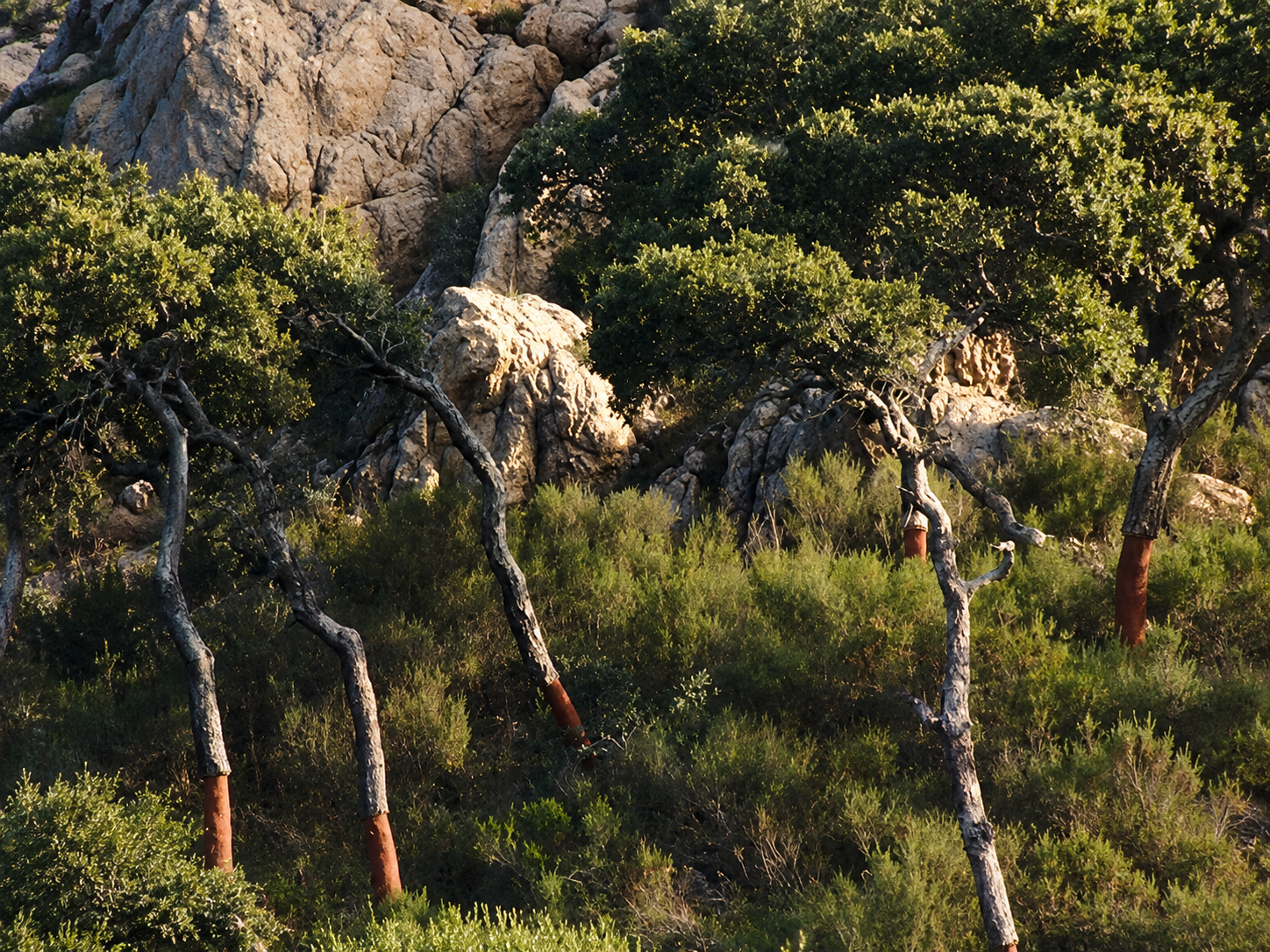
The cork oak is not only a rare and remarkable tree but also a species with a very limited natural distribution. It grows exclusively in the Mediterranean region, primarily in Italy (Sardinia), Spain, Portugal, and several North African countries, including Algeria, Tunisia, and Morocco.
Known to the Romans as Quercus suber, the cork oak has dominated the landscape of the beautiful island of Sardinia for thousands of years, thriving among crystal-clear seas, gentle winds and rugged granite terrain.
Although a cork stopper may seem like a simple product, its production is the result of an exceptionally long and carefully managed natural process. A cork oak requires approximately 30 years to reach the maturity necessary for its first harvest. This initial harvest produces cork suitable only for grinding and manufacturing agglomerated cork stoppers.
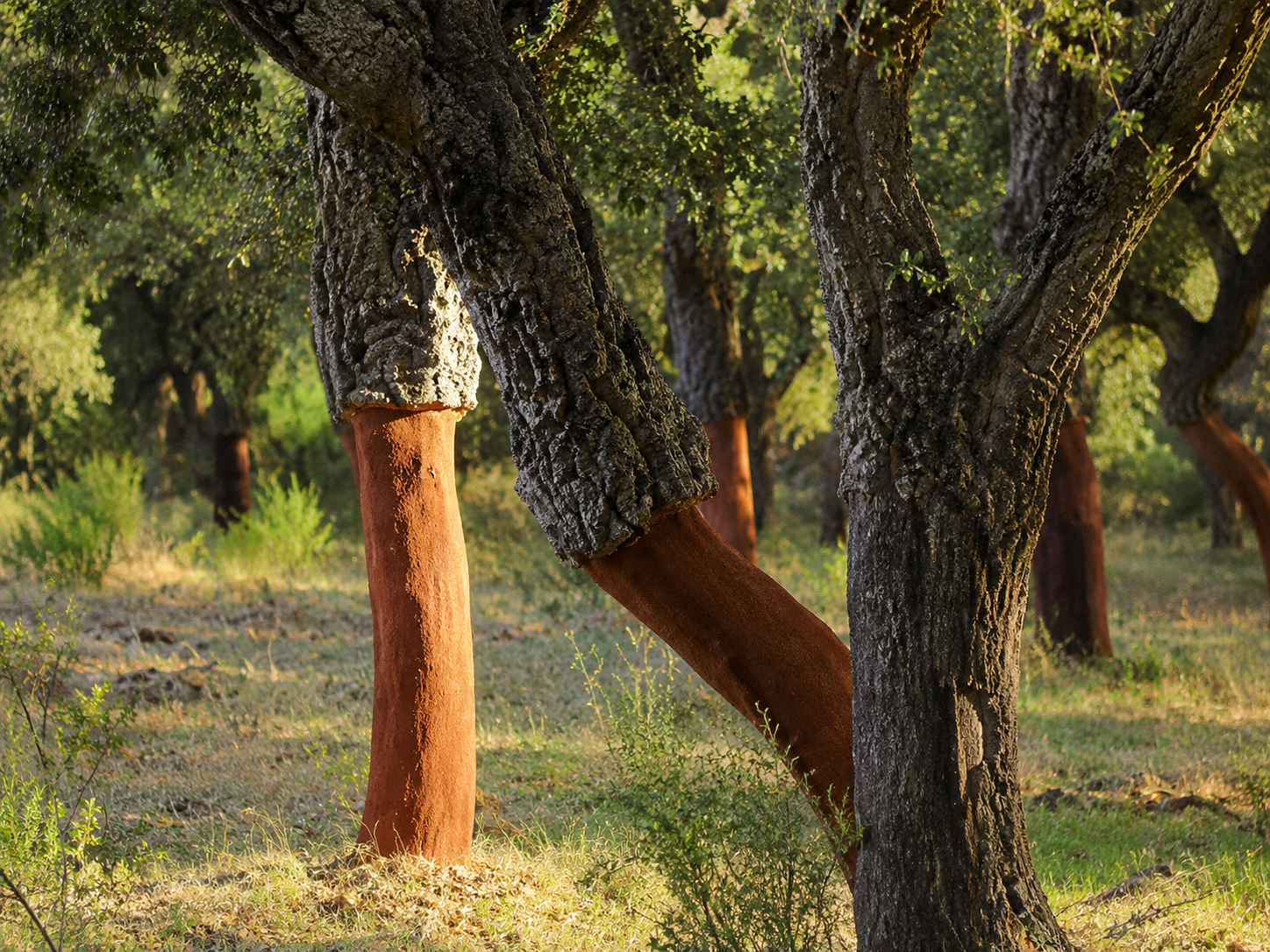
Harvesting is carried out by carefully stripping the bark from the trunk to a maximum height of approximately 1.2 metres. Removing bark above this height would compromise the tree's ability to regenerate and could eventually cause it to die. This highly specialized operation is performed by skilled workers who preserve centuries-old traditions and craftsmanship passed down through generations of cork harvesters.
Following the first harvest, the tree must remain undisturbed for another ten years, allowing the bark to regenerate naturally before producing premium-quality cork. Thereafter, the harvesting cycle is repeated every ten years, illustrating both the sustainability and the considerable time required to obtain this exceptional natural raw material.
Sardinia offers ideal conditions for the cultivation of cork oak. The island's dry, granite-rich soils, combined with its unique climate and environmental conditions, allow the trees to develop exceptionally dense and high-quality cork, widely regarded as the finest produced anywhere in the Mediterranean.
The island's unique ecosystem also protects cork oak forests from many diseases and from the effects of industrial pollution. The dry, granitic terrain promotes the formation of dense, compact cork. It is often said that cork is, in a sense, "granite transformed into wood," since the healthiest and most vigorous cork oak forests are consistently found in regions with granitic bedrock.
Producing premium-quality cork requires meticulous cultivation and forest management practices. These begin with maintaining perfectly clean plantations and carefully pruning the trees, and extend to preserving the natural environment by protecting cork forests from urban development, concrete structures, asphalt roads, excessive noise and pollution. These practices ensure that cork remains one of the world's most sustainable and highest-quality natural materials for wine closures.